An electrical emergency is any fault that could hurt someone or start a fire if it is left until tomorrow. A burning smell from a wall or switchboard, a socket that sparks or feels hot, scorch marks, water in light fittings, or a breaker that trips the moment you reset it all fall into that group. This page covers what to do in the first few minutes, when to call 111 instead of us, and what happens when our electrician arrives.
If the fault is annoying rather than dangerous, such as one dead power point or a light that flickers now and then, it can usually wait for a booked visit. Our electrical repairs page covers that kind of fault finding.
Pricing: a free quote and a fixed price agreed before we start. You get a written, itemised quote, and small jobs can be quoted from photos.
Fault annoying but not dangerous, like a dead socket or a light that will not work? See electrical repairs.
Is it an emergency? The signs that cannot wait
Treat it as urgent if you can smell hot plastic or burning near a socket, switch, light or the switchboard. The same goes for crackling or buzzing from inside a wall, sparks when you plug something in, a faceplate that is warm to touch, or brown marks around an outlet. Water getting into light fittings, the ceiling or the switchboard after a leak or storm is also urgent.
A circuit breaker or RCD that trips again straight after you reset it is telling you there is a fault it cannot live with. Do not keep resetting it, and never tape or wedge a breaker on.
- Burning smell or scorch marks
- Sparking, crackling or hot sockets and switches
- Water in fittings, ceilings or the switchboard
- A breaker or RCD that will not stay on
- Damaged wiring after an accident or renovation mishap
Shock or fire: call 111 first
If someone is in contact with a live source, WorkSafe's advice is not to touch them, because you can be shocked too. Switch the power off at the appliance or the main switch. If you cannot, push them clear with something dry and insulated, such as a broom with a dry wooden handle, then dial 111 for an ambulance. WorkSafe says anyone who has had a shock should get medical advice, even if they feel fine.
Never throw water on an electrical fire. Turn off the power if you can do it safely and call 111. Once everyone is safe, WorkSafe advises leaving the power off after any shock, however minor, until an electrician has checked the installation. That check is where we come in.
How It Works
What to do while you wait for us
If it is safe to reach the switchboard, turn off the circuit that is causing trouble, or the main switch if you are unsure which one it is. Unplug appliances on that circuit. Keep children and pets away from the area, and do not open covers or remove faceplates to have a look.
Take a photo of the switchboard and the problem area if you can do so safely. It helps us bring the right parts and often lets us tell you on the phone whether it can wait until morning. If you smell gas as well, leave the house and call 111 or your gas supplier from outside.
Power out: is it your house or the street?
Before you call anyone, check whether the neighbours have power and whether any switches on your board have tripped. If the whole street is dark, it is a network outage and your lines company handles it. Stay well clear of any fallen lines and assume they are live.
If only your house, or one part of it, has lost power, the fault is on your side of the meter and that is our job. WorkSafe suggests turning off lights and unplugging appliances during an outage so they are protected from a surge when the power comes back.
Storms, flooding and water damage
Auckland storms bring roof leaks, flooded garages and wet outdoor sockets. WorkSafe says any electrical part that has been wet, including plugs, sockets and charging equipment, needs checking by an electrician. If water has got into the house, turn the power off at the mains and leave it off until an electrician has checked the wiring and disconnected anything unsafe.
WorkSafe also warns against resetting tripped breakers or RCDs after flooding until they have been checked, and says EV chargers that have been under water should not be used until an electrician has looked at them.
What happens when we arrive
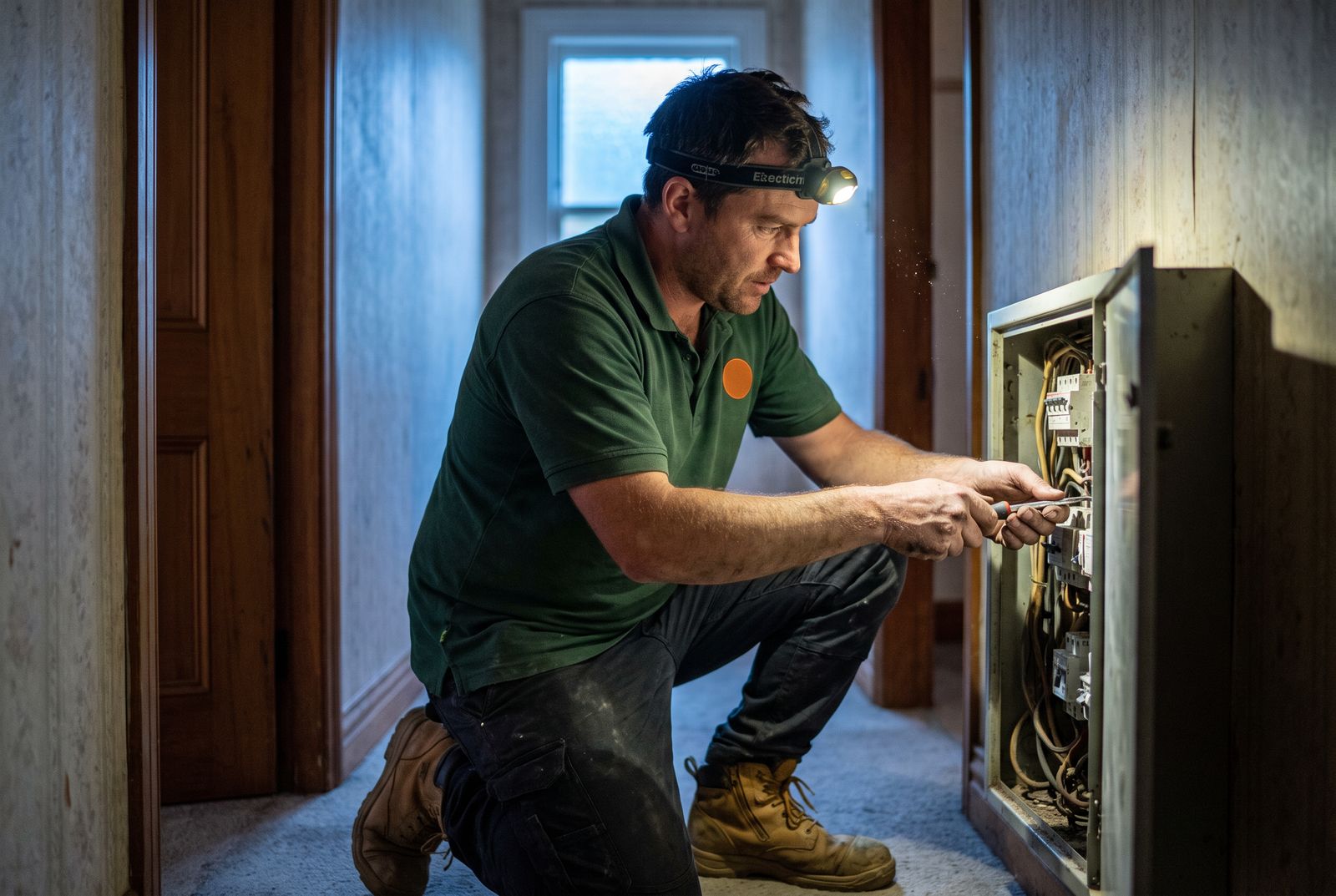
Our first job is to make the installation safe. That means finding the fault, isolating it, and getting the rest of the house back on power where that is safe to do. You pay a fixed call-out fee that we tell you on the phone, not an open-ended hourly bill.
Often the fix is done on the spot. If the proper repair needs parts or a bigger job, such as replacing a burnt-out switchboard, we leave you safe and give you a written, itemised price before any further work starts. Any fixed wiring work comes with a Certificate of Compliance.
Why Choose Cheeky's Electrical for Emergency Electrician
Safe first, then priced
We isolate the danger before anything else, then give you a fixed price for the permanent repair. No surprise bill the next morning.
Honest phone triage
Send us a photo and we will tell you straight whether it needs us tonight or can safely wait for a booked visit.
Licensed and registered
Every electrician holds a current EWRB practising licence. Ask to see it at the door.
Paperwork done properly
Fixed wiring work comes with a Certificate of Compliance for your insurer and your records.
Emergency Electrician FAQs
Should I call 111 or an electrician?
Call 111 first if anyone has had a shock, is injured, or there is a fire. Call us once everyone is safe, so the installation can be checked before the power goes back on.
Can I keep resetting a breaker that trips?
No. A breaker or RCD that trips straight away is protecting you from a fault. Leave it off, unplug what is on that circuit and call an electrician.
The whole street has no power. Can you help?
A street-wide outage is a network fault for your lines company. If only your house or one part of it is out, the fault is on your side and we can find it.
How much is an emergency call-out?
We give you a fixed call-out fee on the phone before we come. Any repair beyond making it safe is quoted in writing before we start.
Is it safe to use sockets that got wet in a storm?
Not until they are checked. WorkSafe says anything electrical that has been wet should be checked by an electrician first.
Will I get a certificate for emergency work?
Yes, for any fixed wiring work we do. Straight maintenance, such as swapping a damaged socket like for like, does not need a Certificate of Compliance.
Emergency Electrician Near You
Find your region or suburb for local emergency electrician information:
Related Electrical Services
See the electrician prices guide or every service we offer.